
Batgirl's Book Club #2

Last week, Batling BatBandwagoner sent Batgirl an article from the Toronto Star about the new direction of the Blue Jays. As anyone who has read Moneyball knows, Toronto GM J.P. Ricciardi, besides being a Corey-Koskie-stealing blackguard, is a protege of one Billy Beane. Or at least was; according to the article in the Star, the Blue Jays are going to eschew Moneyball in favor of Minnyball, which is all very interesting, because Batgirl thinks...

...wait. Haven't you read Moneyball? You haven't? Why on earth not? Well, it looks like we have our next Batgirl's Book Club selection:
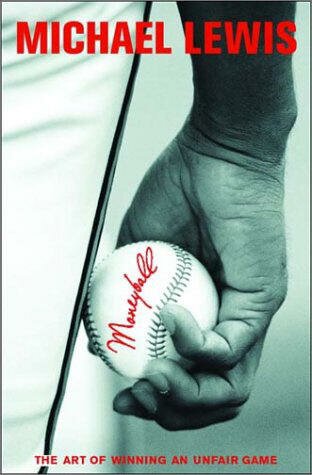
img_bk_moneyball.jpg

That's Moneyball. The book club will commence Monday, April 18th. As you read, please consider the differences between Moneyball and Minnyball.

To read the full Toronto Star article, click below.

FORT MYERS, Fla. - The inexplicable "cult of J.P." appears dead. Baseball Prospectus, the Bible of stats seamheads, has come down hard on the Blue Jays in its sophomorically written 2005 edition.

The honeymoon is over. The Jays front office is accused of abandoning
its reverence for the three-run blast. GM J.P. Ricciardi's own stats
geek, Keith Law, a former Prospectus contributor, is viewed as a
traitor.

As if to confirm what the Prospectus suspected, Blue Jays manager John
Gibbons confirmed last week the Jays will no longer sit around waiting
for the big blow. Gibbons insists he wants his team to play more like
the small-market Minnesota Twins, who on a similar budget, have been to
the playoffs three straight years.

"They're aggressive and they play all-out all the time," Gibbons said
yesterday, prior to the Jays' Grapefruit League opener vs. his new role
models from Minneapolis.

"They hustle on everything. They take the extra bases and they do all
the little things. They sac-bunt at certain times when they need to.
They hit and run. They steal some bases and they're a very good
defensive team. Their pitchers throw strikes."

Hmm. The fact that Gibby has the blessing of Ricciardi for this change
of direction must mean the fourth-year GM, a long-time disciple of the
Rev. Billy Beane, has wrestled himself free from the spell of Moneyball.
Somehow, he's been de-programmed.

One man who seems excited about the change in philosophy is Brian
Butterfield, third-base coach in charge of baserunning.

"Running the bases, (the Twins) are the benchmark in the American
League," Butterfield said. "They do it right. They move up on balls in
the dirt. They're a good two-base (advance on a single) team. That's
what we're striving to be.

"There's clubs we play, we know aren't nearly as aggressive. It takes
the pressure off the middle infielders. They don't have to hold runners
at second base. You can play your first baseman behind some runners. It
gives a team the advantage when you can sit back and concentrate on the
ball off the bat."

What Butterfield described as comfortable opponents they like to play is
the way the Jays were on the bases the last several years. They're
working on changing that.

But there's more to being the Twins than just what goes on in the three
hours of a game. There's a distinct organizational philosophy that
cannot immediately be implemented just because you say it's so. It comes
from the support of ownership and takes a few years to settle in.

"Over the last three or four years I've heard a lot of people say, 'We'd
like to follow the Twins or the Oakland pattern, with the mid-range or
the lower-quarter payroll teams,'" Twins general manager Terry Ryan
said. "Milwaukee, Kansas City and even Texas, I've heard it from. Now,
when I hear Toronto say that ... well, we used to emulate the Blue Jays
back in the '90s. It's come full circle."

Ryan has solid advice for the Jays' decision-making triumvirate of owner
Ted Rogers, president Paul Godfrey and Ricciardi, if they intend to take
a serious stab at changing direction.

"It takes patience from the top, because it's not easy," said Ryan,
entering his 11th season as architect in Minnesota. "You're going to
take a pounding for a while if you're going to go that path. And if the
owner will let the GM and the GM will let the manager and the managers
let the players and the players rely a little on scouting and
development, it can work. But it gets a little dicey, because nobody
wants to take that type of length or patience to get it done.

"(The Jays) have a number of good players coming up from Syracuse and
New Hampshire. You'd like to see a couple of those guys hit. If they do,
all of a sudden you get on a little bit of a roll. Now the fans start to
take notice and maybe things are going the right way you want."

The Jays turnaround won't be immediate, but Baseball Prospectus
objections aside, it seems the Jays are finally headed in the right
direction.

Posted by Batgirl at March 16, 2005 05:49 PM
Comments

Wonderful! I've been meaning to read Moneyball for the last few years now, so I was hoping you would choose it.

Posted by: Pepper at March 16, 2005 06:57 PM

Enjoy everyone. It is one of my favorite books. Even better than Ball Four, in my opinion.

Ball Four was a look behind the clubhouse curtain, this is a look behind a very strange GM curtain.

Posted by: alskntwnsfn at March 16, 2005 07:02 PM

There's nothing in Moneyball or sabermetrics that says you can't be aggressive on the basepaths. Some analysts have simply pointed out that there is a threshold of success in stealing bases, at around 70% I think, where the strategy becomes counterproductive if the team falls below that mark.

This doesn't mean, "Thou Shalt Not Steal" or "Thou Shalt Play Station-to-Station Baseball." It's just information to remind the manager to be smart, be efficient, and work with the kinds of players you got. If your #2 hitter has a 50/50 rate of stealing bases, think twice about giving him the green light. Be more selective about when to give him the steal sign....

I don't know what Baseball Prospectus said about the Jays in their book this year, but it bothers me to see writers oversimplify and distort sabermetrics and Moneyball like it's all this weird dogma of cultists, just so the writer can score some cheap points by taking shots at a strawman.

Posted by: frightwig at March 16, 2005 07:36 PM

My most favorite book in the whole entire world, hands down. I've read it like, a billion times, no joke. Ok maybe a little exaggeration. Thank you batgirl!

Posted by: Sasha at March 16, 2005 08:35 PM

I'm such a loser I get so happy when Youkilis bats in the Sox games and when I saw Nick Swisher play on TV for the first time I nearly died.

Posted by: Sasha at March 16, 2005 08:36 PM

For some reason, the people who haven't started using the "Moneyball" way have decided they must keep it down and rail on it whenever they have the chance. Which is just stupid. The philosophy has it's flaws just like any other philosophy. It, however, also is a good guide for making a team competitive, especially smaller market teams. Stats are a tool, just like scouts and the teams that figure out how to combine both are going to be the most successful. The ones that continue to rely only on scouts or only are stats are going to get passed by.

Posted by: TBird41 at March 16, 2005 09:42 PM

overlooked in this book are the ideas on pitcing and fielding. runners from errors do not score as often as we think unless kyle is pitching and then it is twice as many.

Posted by: Mike&Jane at March 17, 2005 01:00 AM

frightwig (and others):

I haven't read Moneyball yet, and am looking forward to it, but I had heard the stealing efficiency numbers that you cite. What I'm curious about is those numbers' relationship to the goals that Butterfield outlines:

"There's clubs we play, we know aren't nearly as aggressive. It takes
the pressure off the middle infielders. They don't have to hold runners
at second base. You can play your first baseman behind some runners. It
gives a team the advantage when you can sit back and concentrate on the
ball off the bat."

He doesn't even mention success in getting the base. His focus is on disrupting the infielders, making them play the runner and give up some range in the field so that maybe a few more ground balls get through to the outfield, or maybe they're out of position to make good throws after getting to a ball.

Does Moneyball talk about this effect of running? Subjectively, it makes sense, but I don't know whether the stats take it into account.

(I know, I'll read the book, but I'm interested in frightwig's and the other batlings' views as well.)

Posted by: hrunting at March 17, 2005 08:20 AM

The "Moneyball" approach is as a legitimate gameplan as Minnyball. In fact, they actually do have one thing in common that is mentioned in the article: a commitment. The Twins have everyone on the same page for both short- and long-term goals and acquire players to fit that dynamic. So does Billy Beane. The teams that fail at either are missing the full commitment to the idea. Most teams emulating either get impatient and pick and choose certain components. A good current case study under contruction is the Dodgers. Will DePosdesta pull off the complete transformation, or fail somewhere in between? While Nick Swisher and Kevin Youkilis are, indeed, the "Moneyball" dog and pony show, the success or failure of Beane's offspring GM in LA will most probably be the future reference cited by those reviewing the validity of both the book and the Beane business approach.

The one big thing I believe is that the "Moneyball" approach fails in the post season. A large sample size of games and at bats are required for a team/player to perform to his average. Post season is all about getting one more run, getting one more out, getting one more base closer to home and, usually, hitting against only a staff's number 1, 2 and (possibly) 3 pitchers...making each progression of 90 feet critical. The small sample size and complete different game dynamics work against the "Moneyball" plan. The A's in the post season are horrific at instinct plays and "the little things"-uhm...like sliding home instead of standing up...ahem.

It's a great book and and perfect for comparing and contrasting to the Twins. I have since read some of Lewis' more business-related books and enjoyed them as well. "Liars Poker" is a favorite.

Posted by: BAT bandwagoner at March 17, 2005 09:08 AM

"Moneyball" is great book. I read it about eighteen months ago. It is a good choice for the book club because it does contrast the A's with the Twins. In addition, many of the GM's that get a mention in the book have become celebrities - at least to baseball fans.

Posted by: cdwilson68 at March 17, 2005 10:40 AM

Great Choice...I've been meaning to read it again. While I am not totally sold on the Moneyball approach to running a team (I think Terry Ryan's approach is still better in the long run), I am totally sold on the book itself. It offers a great look at running a team and another great way to learn more about some of the "unknown" parts of MLB. My only question is where in the heck did I put my copy?

Posted by: SDave at March 17, 2005 10:42 AM

Some good points already (and over a month to go before the book club discussion starts).

The article does seem a bit misguided. It can be argued the Twins play their own brand of Moneyball, because they often utilize types of players most other teams in this day and age don't: control-artist starters who focus on putting the ball in play rather than strikeouts (with the happy exception of Mr. Santana) and toolsy athletes to run down the struck baseballs said starters yield (many teams today prefer the Juan Gonzalez model outfielder, for instance). Moneyball isn't about fitting square pegs into round holes or adhering to a playing style set in stone, it's about finding ways to play the game where you're going to get the most bang for your buck.

Of course, when you can develop players like Santana and Mauer, you don't really need much of a philosophy.

Posted by: jianfu at March 17, 2005 11:10 AM

I was looking at the Baseball Prospectus 2005 in the bookstore the other day and came across a term I did not understand (and there did not appear to be an explanation in the book about it). What on earth is the Pythagenport record?

Win Twins!

Posted by: talldrinkowater at March 17, 2005 11:13 AM

For all you past, present and future readers, please keep the following in mind as you read or discuss:

The Moneyball STRATEGY is not about maximizing on-base percentage. That is merely a TACTIC.

The STRATEGY is to find an asset that is undervalued by the marketplace; i.e., maximize the return on one's dollar.

Beane identified some time ago that OBP was undervalued and contributed more to runs on a per-dollar basis than other things, such as HR and SB.

However, the market may catch up, and OBP may become an overvalued commodity. Then Beane will (or perhaps is/has) go back and see what is undervalued. He will change his tactic, but not his strategy.

When that time comes for Beane to change tactics, it will be easy to tell those who know the difference from those who don't. Those who don't will think that he has abandoned his strategy.

I sense the Toronto Star writer may be one who doesn't know the difference.

Sean

Posted by: Sean at March 17, 2005 11:28 AM

Here are some thoughts from when the book was published:
http://www.blissfulknowledge.com/archives/000549.html

Posted by: Dr. Manhattan at March 17, 2005 11:31 AM

Moneyball isn't about fitting square pegs into round holes or adhering to a playing style set in stone, it's about finding ways to play the game where you're going to get the most bang for your buck.

Bingo. The point of the "Moneyball" approach, and what drew Michael Lewis, previously a financial writer (his "Liars' Poker" is one of the great books about the insane culture of '80s-era Wall Street), to the subject, is to identify undervalued assets and accumulate them.

The subtitle, if I'm remembering right, is "The Art of Winning an Unfair Game." Billy Beane's Oakland A's, lacking the financial resources to compete with the Yankees and Red Sox, had to derive the bulk of their resources for on-field talent from guys who could help win ballgames in their first six years, prior to reaching free agency. (Or in many cases, prior to getting especially close--as this winter's trades of Hudson and Mulder showed.) This came to inform Oakland's drafting and developmental strategy, as well as Beane's acquisitions of talent from elsewhere.

What's interesting to me about this approach is that it emphasized risk in some situations and minimized it in others. Example: by focusing drafts on college players rather than toolsy high school stars (like Beane himself had been) who'd kicked butt against weak competition, Oakland made it more likely that their picks would at least reach the majors rather than flame out--or blossom into superstardom--as top prep talent often does. On the other hand, taking risks like signing a reliever who throws underhanded (Bradford) or moving a catcher to first base (Hatteberg) allows undervalued talent to emerge. Of course, if those gambits don't work out, you've lost a lot less in terms of time and opportunity cost than if you'd given an 18 year-old a $2 million signing bonus.

Anyway, it's a great book and I look forward to the discussion.

Posted by: jeffstoned at March 17, 2005 12:22 PM

Whoops--I'd tried to italicize the first line in my previous post, which ihlin wrote above. Live and learn, I guess... anyway, s/he got it exactly right.

Posted by: jeffstoned at March 17, 2005 12:23 PM

I'm looking forward to reading this book. It's been on my "to-read" list for a while now, but never has made it to the top. Today, that all changes!

Let me note here that I love the Bat-Girl Book Club!

Beth

Posted by: Just Beth at March 17, 2005 12:54 PM

RE: "Pythagenport"

Bill James, a high-ranking guru of statistical baseball, created a formula that projected winning percentage based upon "runs scored" and "runs scored against." The formula is similar to the Pythagorean Theory of which we are all familiar. The basic formula was: winning percentage is equal to total "runs scored" quantity squared, divided by the sum of "runs scored" quantity squared AND "runs scored against" quantity squared.

Later as empirical data proved the formula was on the right track...but not quite taking in all variables, it was decided the exponent, instead of 2 ( or squaring the quantity) was actually closer to something like 1.8.

Further, like all baseball-related statistical innovations, this was eventually tweaked to the "Pythagenport" form where the exponent actually changes based upon the belief that it should increase as runs per game increase.

Sorry Batgirl :(

To add alittle sass via a literary prop: Ayn Rand said, "Contradictions do not exist. Whenever you think that you are facing a contradiction check your premises. You will find that one of them is wrong."

Posted by: BAT bandwagoner at March 17, 2005 02:43 PM

In addition to writing a very fine and interesting book, Michael Lewis happens to be married to one Tabitha Soren! Just thought you might want to know that (assuming you are 30-something and watched MTV).

Posted by: The Tizzod at March 17, 2005 03:35 PM

1) I read Moneyball a year or two ago, and maybe I'll read it again this month to contribute more to this discussion; but, of the people who I know who've read it, I seem to be the only one who didn't like it that much. I loved the content, the stories, the behind the scenes looks- I just did not like the writing style. Is that something that will be discussed here? I thought his writing was clumsy and non-cohesive. Chapters jumped around in time without an artful way of joining the seams. He seemed to repeat certain pieces of information too many times because of the chronological shifts. There just didn't seem to be a flow to the book.

2) It seems like Billy Beane has been slowly shifting his paradigm over the past 2 years. The sense I get, with each move and acquisition they make, is that he's paying a little more attention to defense, and less on the 3-run jimmy jack. OBP is still king, but they've got excellent defenders in the OF instead of lumbering giants like Dye or Stairs or Terrence Long. Scrappy, hard-nosed players like Byrnes, Kotsay, and Kielty patrol the outfield while their infield is solid with Chavez, Crosby (not that Tejada was a slouch), Ellis, and Kendall behind the plate. And their bullpen is stacked.

Posted by: Paul at March 17, 2005 03:56 PM

Well I find the tone of Michael Lewis extremely offensive and off-putting, and it seems to me he spends most of the book sneering down his nose at anyone who disagrees. However I think the approach definitely has its merits and like everything, it needs to evolve and change to be more effective.

But you know, I like the book in the end, as it has a happy ending ;)

...and that's all I'm gonna say on it!

Posted by: Mimiru at March 17, 2005 04:09 PM

Welcome back from winter vacation, fellow Batlings!

Moneyball was compelling, certainly, but I spent most of the book reading a few pages, then smacking my head against the wall, then reading some more pages. The Twins get severely dissed in this Billy Beane love-fest. The author barely mentions that they kick Oakland's ASS in the playoffs (thanks, AJ!) This small fact gets dismissed as, "anything can happen in the post-season". Yeah, anything can happen... when you're the Twins.

I learned a lot from the book, sure, but one of the things I learned is that the author wants to marry Billy Beane and have his lanky, slightly bitter children.

Feh.

Posted by: Freg Nergstrom at March 17, 2005 04:59 PM

Perhaps a simpler explanation of the Pythaga thingy might be in order, one without high algebraicals. Like this:

-- Teams win because they score more runs than their opponent. For one game, this is an obvious truth.

-- Therefore, over the course of a season, or any sufficent number of games, it should be possible (should being a qualifier here) to determine how many games a team ought (another qualifier, you will note) to have won based on runs scored vs. runs allowed.

All in all, an admittedly inexact tool, because it's very possible for a team to win 2 out of 3 in a series but get outscored overall for the series. Win two close ones and lose once badly, you're Pythagorically "lucky" even though luck may not have anything to do with winning two out of the three, or giving up a whole bunch of runs and getting hammered and lohsing on a regular basis.

Posted by: Hart at March 17, 2005 06:04 PM

hrunting, I'd agree with the others who have said that Moneyball the book isn't about following a specific formula for winning games. It's about how one team tries to exploit inefficiencies in the marketplace and undervalued skills to get a better bang for its buck. That general principle can be applied in various ways.

Maybe a club figures it can stockpile effective and affordable starting pitchers by pursuing guys who don't make the radar gun light up but also don't walk batters, while the organization also emphasizes good defense throughout the system. Maybe it means your club doesn't sign many top Dominican or Japanese prospects, but you're scouting Venezuela, Australia, and Europe harder than anyone else. Maybe you're the only club with scouts watching cricket players in India, or something.

I think the most important principle is a commitment to innovation, discovery of new knowledge, and the mission to find what the competition overlooks. Anyway, it is a kick to read. If you ever wished you could be in the room when a GM is working the phones, talking strategy with his staff, and in the war room during the amateur draft, the book puts you there with Billy Beane at a particular moment in time. I felt like there was one aspect of the A's organization conspicuously missing from the story, but we can talk about that later.

I just hope that people who "don't care about stats" won't feel put off from reading the book. It's not a jargon-clogged screed about math formulas. Michael Lewis tells a good story. Fascinating and fun. When I finished, I just wished there was a sequel about the Twins.

Posted by: frightwig at March 17, 2005 06:37 PM

I don't know about a sequel. But there is a book out called 'Aces' about Hudson-Mulder-Zito and they are making a move about Moneyball apparently. Not sure what the odds are going off at that it will ever get made though.

Posted by: alskntwnsfn at March 17, 2005 07:15 PM

Right, right, right. I think I get that part of it, frightwig, that the Moneyball strategy is really about finding undervalued parts (like high OPS guys, but only when they are actually undervalued) and building an effective team efficiently.

What I'm curious about is that 70% number attached to stealing bases (which is really Bill James, or someone, right?) Is that purely based on getting that base vs. losing a base runner, or does it take into account the ways in which aggressive runners can make things happen for hitters? In the extreme case (i.e. Ricky Henderson), you could see the pitcher and infielders worrying more about what he was doing than what was going on at the plate, and that must have helped the guys who hit after him, right?

That's why I loved it when the young Kirby Puckett would stand off first and just sort of twitch his hands. Drove the pitcher nuts. And the infielders had to cover the bases, not the gaps. It was a good thing, and I can't wait to see if Shannon Stewart really is going to go back to base-stealing mode this year, as he has suggested he will. That would be sweet.

Anyway, sorry if I'm off topic. And explaining. There really is a question in here: does that 70% number work with anything more than the value of moving up versus the risk of losing the base runner, and if not, how useful is it, really?

Posted by: hrunting at March 18, 2005 08:26 AM

Oh, and Batgirl -- Legovision rocks. You made my day.

Posted by: hrunting at March 18, 2005 08:27 AM

"does that 70% number work with anything more than the value of moving up versus the risk of losing the base runner, and if not, how useful is it, really?"

Short answer is that 70% applies to the "average" case, so it doesn't necessarily apply to extreme cases like Rickey Henderson. Of course, one of the reason Henderson made people nervous was that he was successfull at stealing bases (80.6% for his career), so part of causing that nervousness might be that the runner is not only likely to run, but also that he's a threat to actually make it there (which is just another way of saying that even if a guy like Cecil Fielder decides to pressure the defense by running, no one is going to be worried about it since he's pretty easy to throw out).

Posted by: qsilvr2531 at March 18, 2005 09:50 AM

Just remember while reading Moneyball that it wasn't written by Billy Beane, and Billy Beane had very little, if any, input as to what did and did not go into the book.

He has often come out and publicly stated that a few of the facts and "strategy's" that are presented in moneyball are in fact already outdated or radically different from what is currently practiced in the Oakland front office.

I think Moneyball is a great book in that it challenges us to think outside the box about baseball and to question what we previously held to be "truths" about baseball, and that is the "Moneyball way." The Moneyball way isn't about valuing stats over scouts, or eschewing stolen bases and hustle for the 3 run home run, it is about finding undervalued performance for your club and identifying over valued performance that you can trade away or get maximum returns on.

I look forward to everyone reading Moneyball as I think it could foster a lot of great discussion, in fact maybe I should go back and reread it just to brush up before the 18th!

Posted by: rsmithx at March 18, 2005 11:08 AM

I ordered mine today(!)

Posted by: nailbiter at March 18, 2005 05:02 PM

The 70% threshold just addresses the risk/reward of trying to steal a base rather than holding the base until the batter puts the ball in play. But there are established probabilities of scoring depending on the position of baserunners and the number of outs. Certainly it's an advantage to have someone on 1st base to open up a hole in the infield and distract the pitcher, as opposed to having bases empty, and that's reflected by the probability tables and often by batting splits.

Indirectly, that's implied by the 70% rule, as well. I mean, if you're going to send a 50/50 basestealer to 2nd base, then half the time not only have you given up an out but you've thrown away the advantages to the hitter while your guy was on 1st base, right? So while it's good to have a twitchy runner on 1st base to distract the pitcher and whatnot, how often do you really want to carry out the threat of him stealing 2nd?

If it's Rickey, yeah, give him the green light. My whipping boy Rivas usually has a very good CS%, too. Lew Ford has a 92% success rate so far in the majors (22/24). You can feel confident about putting them in motion. Jacque Jones, on the other hand, has a 60% career rate and is typically worse than that. Last year was a more usual 13/23 (56.5%). Gardy should be more selective about when to give the green light to Jacque.

Posted by: frightwig at March 18, 2005 05:15 PM

Thanks, frightwig. That was helpful.

And you're right. I have no desire to see Jacque run more. Matty, though, might have the advantage of surprise.

Posted by: hrunting at March 19, 2005 09:19 AM